Audit trail
Better Email includes an organization-level audit trail so teams can review important changes across the platform.
Enterprise-only feature: Audit Trail is available on Enterprise plans.
What the audit trail is for
The audit trail helps teams answer questions like:
- who changed this setting?
- when was this design system or integration updated?
- who authenticated or reconnected an integration?
- when did an export happen?
- which users or memberships changed?
This is useful for governance, security reviews, handoffs between teams, and debugging workflow issues.
What gets recorded
The exact event set can evolve, but the audit trail is designed to cover the most important organization activity, including:
- authentication events
- membership and user-management changes
- design system version activity
- integration changes
- exports
- settings updates
- External Reviewer changes: invitations, new review links, turned-off links, requirement changes, and removals
Each event is stored with structured metadata so teams can inspect both the human-readable summary and the underlying details.
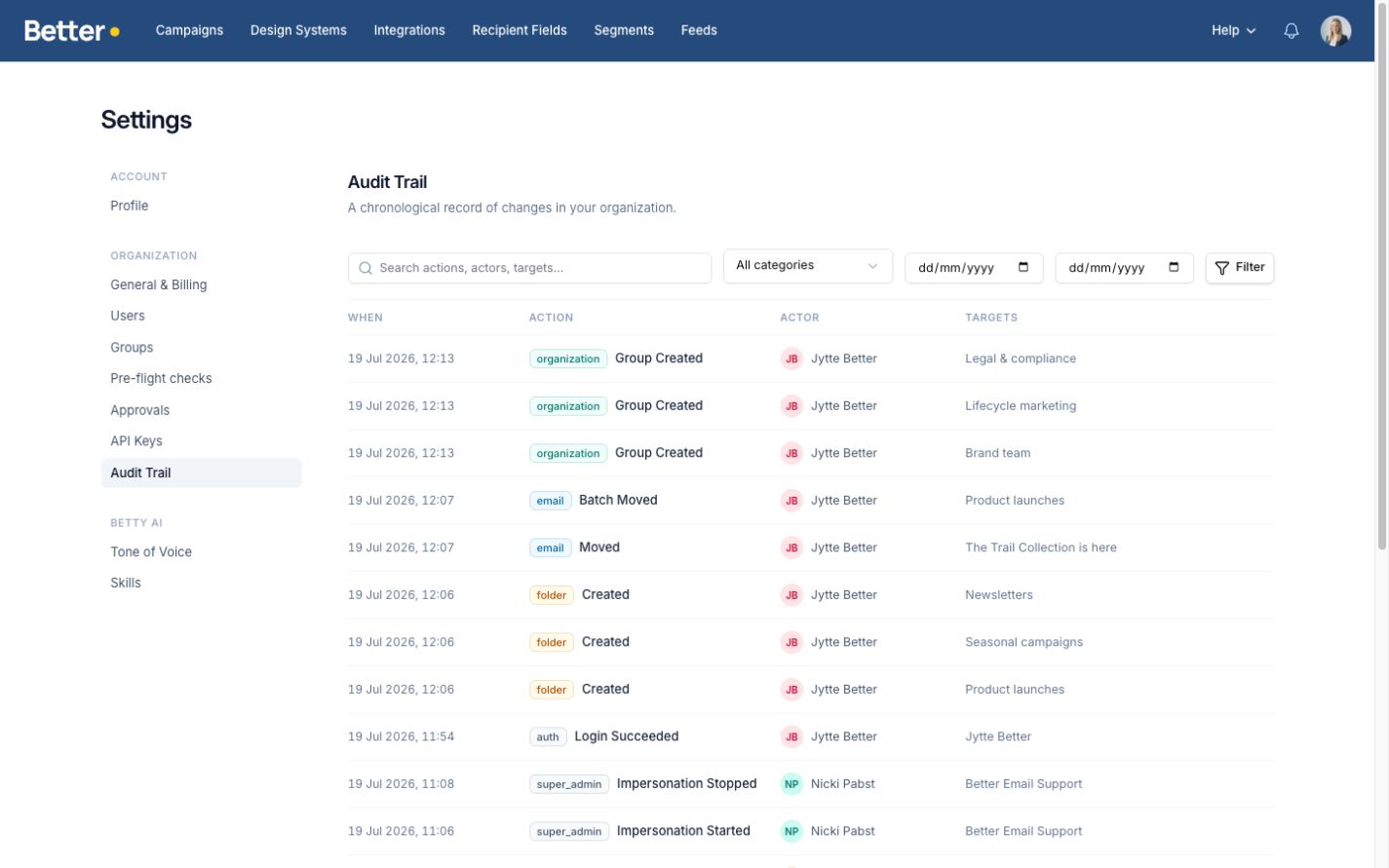
Browsing audit events
In the Audit Trail view, teams can filter events by:
- category
- target type
- actor
- date range
- text search
This makes it easier to narrow a large event stream down to the change you actually need to investigate.
Event details
Each audit event includes a detail view with context such as:
- the action that happened
- when it happened
- who performed it
- which targets were affected
- structured metadata
- request context
- raw payload data
This makes the audit trail useful both for everyday troubleshooting and for more formal reviews.
Best practices
- Use the audit trail as the source of truth when reconstructing who changed what.
- Check audit events early when debugging permission or export issues.
- Filter by actor and date range first when investigating operational incidents.
- Review export-related events when a team thinks "nothing changed" but the ESP output differs.